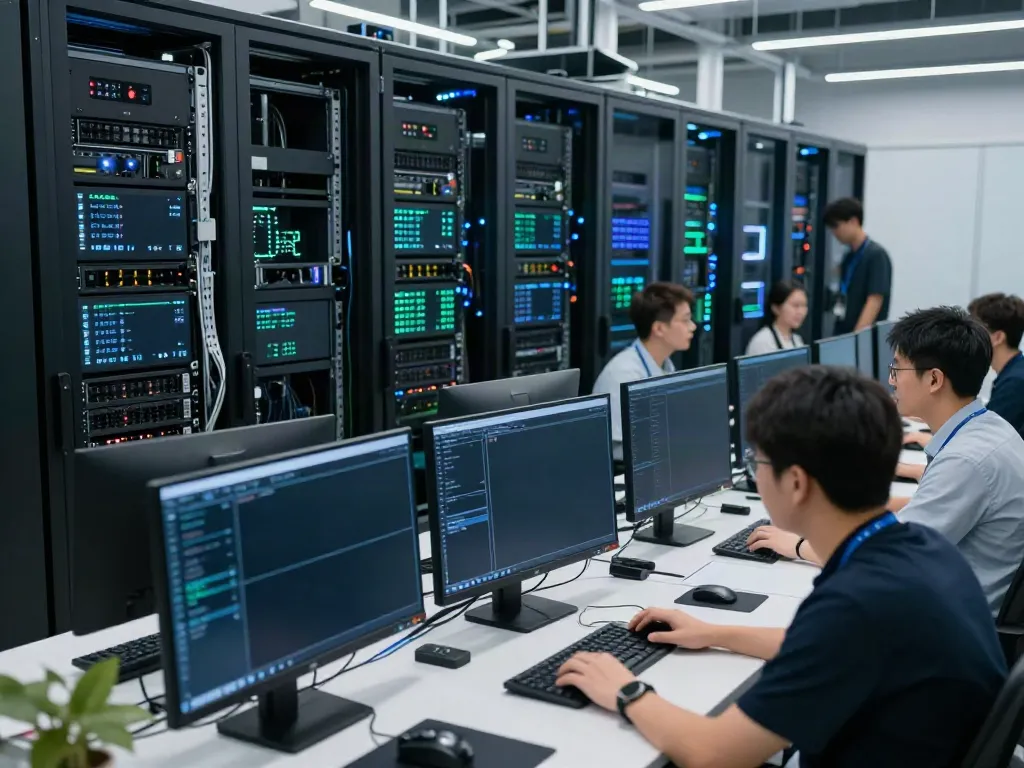
Understanding AI Data Centers
The rapid advancement of artificial intelligence (AI) has led to an unprecedented demand for specialized infrastructure that can handle complex computations and large-scale data processing. Enter the AI data center, a facility specifically designed to meet the unique requirements of AI applications, such as high-density computing and efficient power management. These data centers are essential for developing, training, and deploying AI models that drive innovations across various sectors, including healthcare, finance, and autonomous systems.
To fully grasp the significance of an AI data center, it is essential to understand how it differs from traditional data centers. Unlike conventional facilities, which primarily support a broad range of computing tasks, AI data centers are built around the demanding needs of machine learning and deep learning processes. By leveraging advanced hardware and efficient power allocation strategies, these centers can significantly enhance computational performance, thereby accelerating AI development. When exploring options, AI data center resources provide comprehensive insights into the infrastructure supporting AI initiatives.
What is an AI Data Center?
An AI data center is a specialized facility that houses the computing infrastructure necessary for powering AI applications and services. These centers are equipped with high-performance hardware, including GPUs and TPUs (Tensor Processing Units), which are optimized for the parallel processing tasks typical of AI workloads. This infrastructure supports tasks ranging from data preprocessing and model training to real-time inference and predictions. Additionally, AI data centers focus extensively on maximizing power efficiency and cooling solutions to maintain optimal operating conditions.
The Importance of Power Management
Power management is a critical aspect of AI data centers, as these facilities require substantial electricity to operate effectively. Efficient power management ensures that the data center can handle high-demand workloads without overheating or incurring excessive operational costs. This involves implementing advanced cooling techniques, resource allocation strategies, and monitoring systems that track power consumption in real-time. The ultimate goal is to create a stable and sustainable environment where AI calculations can occur continuously and without interruption.
Key Differences Between AI and Traditional Data Centers
While both AI and traditional data centers share the fundamental purpose of providing computational resources, there are several key distinctions between them:
- Hardware Configuration: AI data centers utilize a higher density of GPUs and specialized processors, whereas traditional data centers typically rely on CPUs, which may not be as efficient for parallel processing tasks.
- Workload Optimization: AI data centers are optimized for specific AI workloads, focusing on throughput and low-latency performance. In contrast, traditional data centers are designed for a more diverse range of applications, which can result in less efficient resource usage.
- Power Consumption: The electricity demands of AI data centers are significantly higher than those of traditional data centers, necessitating advanced power management solutions to operate sustainably.
AI Infrastructure: The Power Plans Explained
To support the burgeoning needs of AI data centers, 51 AIpower has developed a range of AI Infrastructure Power Plans tailored to meet diverse operational requirements. These plans not only provide the necessary power but also create a structured framework for participants to engage in the AI Token Economy.
Overview of AI Infrastructure Power Plans
AI Infrastructure Power Plans are designed to support the electricity and computing capacity required for eligible AI workloads. Each plan offers different levels of power access and efficiency, catering to various user needs, from individual participants to large enterprises. The structure of these plans allows users to contribute to the AI infrastructure without managing the underlying hardware directly.
How Power Plans Impact AI Operations
The power plans offered by 51 AIpower directly influence the efficiency and performance of AI operations. By selecting an appropriate plan, users can ensure that their contributions effectively support the computing power needed for AI factories. The structure of these plans allows for scalable participation, where the level of power support correlates with the performance of AI workloads.
Choosing the Right Power Plan for Your Needs
When selecting an AI Infrastructure Power Plan, consider the following factors:
- Scale of Operations: Determine the size of your AI operations and choose a plan that matches your power needs.
- Duration of Participation: Some plans are designed for short-term engagements, while others support long-term participation. Assess your operational timeline before selecting a plan.
- Financial Considerations: Evaluate the cost of each plan in relation to the potential rewards and performance metrics associated with your AI workloads.
Optimizing AI Data Center Performance
As AI data centers evolve, optimization strategies are crucial for enhancing performance and reducing operational costs. Understanding the best practices in power usage and resource management can lead to significant improvements in overall efficiency.
Strategies for Efficient Power Usage
Efficient power usage is vital for the sustainability of AI data centers. Some strategies to consider include:
- Dynamically Adjusting Power Levels: Implement systems that can adjust power usage based on workload demands, ensuring that energy is not wasted during low-activity periods.
- Utilizing Energy-Efficient Hardware: Invest in hardware that offers better performance per watt, reducing overall energy costs while maximizing computational power.
- Implementing Renewable Energy Sources: Integrate solar panels or wind turbines to power data centers, lessening reliance on traditional electricity sources and promoting sustainability.
Cooling Techniques for High-Density Computing
Efficient cooling is essential for maintaining optimal performance in AI data centers. Some effective techniques include:
- Hot and Cold Aisle Containment: Organize server racks in a way that separates hot and cold air, improving cooling efficiency.
- Liquid Cooling Solutions: Utilize liquid cooling systems that can better dissipate heat than traditional air cooling methods, especially in high-density environments.
- Thermal Energy Storage: Implement systems that store chilled water during off-peak hours, using it to cool the facility during peak power consumption times.
Real-World Examples of Optimized AI Data Centers
Several organizations have successfully optimized their AI data centers using innovative strategies:
- NVIDIA: This tech giant uses advanced liquid cooling systems to enhance their data centers' performance while ensuring energy efficiency.
- Google: Known for its commitment to sustainability, Google has invested significantly in renewable energy sources to power its AI infrastructure.
- Microsoft: The company employs AI to optimize power usage in their data centers by predicting the most efficient energy consumption patterns.
Future Trends in AI Data Centers
The landscape of AI data centers is continually evolving, driven by emerging technologies and changing operational needs. Understanding these trends can help organizations prepare for the future of AI infrastructure.
Emerging Technologies Shaping AI Infrastructure
Several technologies are set to redefine the AI data center landscape:
- Edge Computing: Moving computations closer to the data source reduces latency and improves performance, particularly in applications requiring real-time processing.
- Quantum Computing: Although still in its infancy, quantum computing promises to revolutionize AI capabilities by providing immense computational power for complex problem-solving.
- Advanced AI Algorithms: New algorithms that can optimize resource allocation and processing efficiency are continuously being developed, enhancing the performance of existing infrastructure.
The Role of Green Energy in AI Data Centers
As environmental concerns grow, the integration of green energy into AI data centers becomes imperative. Sustainable practices such as employing renewable energy sources and improving energy efficiency will not only benefit the planet but also align with corporate responsibility initiatives.
Predictions for AI Data Center Growth in 2026
By 2026, we expect AI data centers to see significant growth driven by increased investments in AI technologies, leading to:
- Investment in Infrastructure: Companies will invest heavily in building AI-specific data centers to address the increasing demand for computational resources.
- Global Expansion: AI data centers are likely to proliferate across the globe, catering to local demands while addressing specific regulatory and environmental concerns.
- Innovation in Power Solutions: Continued advancement in power management technologies will ensure that AI data centers operate efficiently and sustainably.
Getting Involved in the AI Token Economy
As the AI Token Economy expands, individuals and businesses have unique opportunities to participate and benefit from this emerging market. Understanding how to engage effectively can unlock significant advantages.
How Individuals Can Participate
Individuals can engage in the AI Token Economy through AI Infrastructure Power Plans, contributing to the powering of AI operations and earning rewards based on their contributions. Participation offers a practical way to support AI data centers without requiring ownership of hardware or direct management of operations.
Understanding AI Tokens and Their Value
AI tokens serve as units of measurement for computing tasks within AI infrastructures, analogous to how kilowatt-hours measure electricity. Each action within the AI operations generates input and output tokens that contribute to the overall computational effectiveness.
Contributing to AI Infrastructure: Steps and Rewards
To contribute effectively, individuals should:
- Choose an appropriate Power Plan based on personal goals and available resources.
- Activate the chosen plan to commence contribution to AI operations.
- Monitor usage and performance metrics to understand the impact of their contributions on AI workloads.
- Receive rewards based on the recorded contributions during each settlement period.
What Are the Risks of Participating?
While participating in the AI Token Economy presents numerous opportunities, it also comes with inherent risks, including fluctuating electricity prices, operational costs, and the rapidly changing landscape of AI technologies. Participants must remain informed and prepared to navigate these challenges.
Are There Eligibility Requirements?
Participation in AI Infrastructure Power Plans may require account verification and adherence to local jurisdictional regulations. It is essential for individuals to review the terms and ensure they meet all requirements before engaging.